
Building pathways: Tamara Cascagnette on community engagement and the growth of Indigenous midwifery in Ontario
December 16, 2025
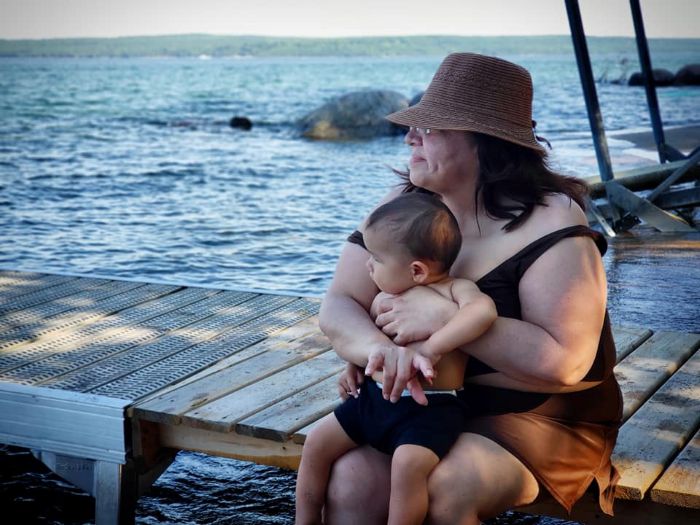
Pictured above: Tamara Cascagnette and her great-nephew, Gizhik
Tamara Cascagnette has spent the past year crisscrossing the province, helping communities explore what it means to bring birth home. As Community Engagement and Outreach Specialist with the AOM's Indigenous Midwifery team, her work supports communities considering Indigenous Midwifery Programs (IMPs), gathers input from Elders and families and strengthens the relationships that underpin this work.
For Cascagnette, relationships are the foundation of her work.
"Relationships are who we are as people," she said. "You're building trust, and that's a big thing. People can call you and know that they can count on you, that you can help."
That help takes many forms. She guides communities through the IMP application process, connects them with resources and ensures that the people most affected by these programs have a voice in shaping them.
Community engagement at Beausoleil First Nation
In September, Cascagnette led the coordination of a community engagement session at Beausoleil First Nation on Christian Island in Georgian Bay. The event supported the reintroduction of midwifery to the greater community and the continued development of the community Governance/Advisory Circle for Menwaasigejig IMP at Midland Midwives by the Bay.
The session brought together many community members including young parents and their babies, grandmothers and frontline workers to learn about midwifery services and provide input into program delivery. What came to the forefront was not only the need for midwifery care in the community, but also an unexpected focus in the discussion. "The majority of the conversation ended up being about education and becoming a midwife," Cascagnette said, "which was really surprising to me."
The questions reflected a broader pattern that she has observed throughout the province. Communities are wanting access to midwifery care, but they are also looking for pathways to train Indigenous midwives from within their own communities.
For a long time, all that we saw in the life cycle was life and then death, never birth. Witnessing birth reminded me of the responsibilities that we have to one another, but also the ceremony that is birth.
(Tamara Cascagnette)
Gathering knowledge in Treaty #3 territory
In October, Cascagnette attended the Grand Council Treaty #3 Safer Births gathering in Kenora. About 25 Elders participated, most of whom shared their thoughts in Anishinaabemowin. "The main point of the gathering was to get feedback from them about what safer births look like from their perspective and also to inform them about the present day practice of midwifery," Cascagnette said. "And to learn what traditional practices they thought were important to bring forward into the present."
Elders shared teachings across the life cycle, from childhood through to early parenting. They discussed the importance of family members speaking to the baby during pregnancy. Elders also shared their vision for what a physical birthing space could look like, with suggestions grounded in traditional teachings and community needs. "The Elders have a lot to share about birth, about life cycles, about medicines," Cascagnette said. "Everything they said confirmed everything I had heard previously.”
The stakes of culturally safe care
Cascagnette is clear about why this work matters. She pointed to the deaths of Joyce Echaquan, an Atikamekw woman who died in a Quebec hospital in 2020 after experiencing racist abuse from staff, and Brian Sinclair, an Indigenous man who died in 2008 after waiting 34 hours without treatment in a Winnipeg emergency room.
"If we can bring Indigenous service providers into community, that's where I want to see things go," she said. "People have experienced systemic abuse in hospitals. Disrespect. Neglect."
Cascagnette has been witness to three births herself, including those of her great-nephew and great-niece. Both of those births were followed by welcoming ceremonies with family. For her, these experiences represent something that was taken from communities when birth was removed and medicalized. “For a long time, all that we saw in the life cycle was life and then death, never birth," she said. "Witnessing birth reminded me of the responsibilities that we have to one another, but also the ceremony that is birth."
A vision for the future
The National Council of Indigenous Midwives holds a vision of a midwife in every Indigenous community. It’s a vision Cascagnette shares, while also advocating for more. "You have to have at least two, and if you're lucky, three midwives," she said. "They have to rotate. There has to be somebody always on call. You're setting yourself up for burnout if you're there in community by yourself."
It is a reality facing midwives across the province, and one of the reasons why advocacy for sustainable staffing and accessible education pathways remains central to the work. Progress has been hard-won, but Cascagnette said she sees momentum building. "I think the work that we've been doing since the inception of the IMP program has made a lot of impact," she said. "People are talking about midwifery across the country because of what we've achieved in Ontario. The exemption clause, there's nothing like that across the country."
Cascagnette sees the growing interest in midwifery at conferences and community gatherings as evidence of progress. At recent events including one hosted by the Chiefs of Ontario, she described steady streams of visitors to the Indigenous Midwifery booth, a welcome change from years past.
"Before, we were lucky to talk to anybody," she said. "Now they just keep coming and coming.” Visitors come by to gather information about how to reclaim and restore the practice of midwifery for their families and communities and with that, reclaiming and restoring life balance.